Digital Humanities Summer Fellowships
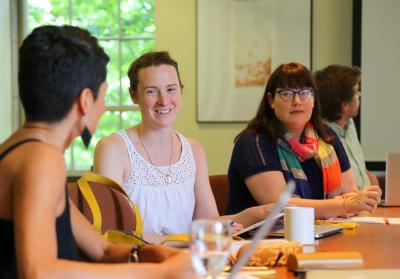
The Simpson Center offers annual summer fellowships for faculty and graduate students to pursue research projects that use digital technologies in innovative and intensive ways and/or explore the historical, social, aesthetic, and cross-cultural implications of digital cultures. The program has three primary goals:
- To animate knowledge—using rich media, dynamic databases, and visualization tools
- To circulate knowledge—among diverse publics
- To understand digital culture—historically, theoretically, aesthetically, and generatively
The Simpson Center gratefully acknowledges the support of a National Endowment for the Humanities Challenge Grant and the Andrew W. Mellon Foundation as well as many donors to the endowment which is underwriting these fellowships.
2026 - 2027 Digital Humanities Summer Fellows




2019 - 2020 Digital Humanities Summer Fellow

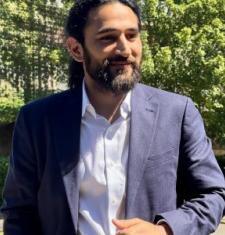
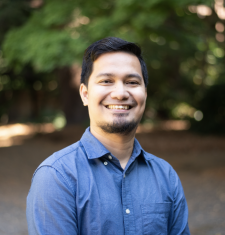
Isaac Rivera (he/him/his)
Digitizing The Sacred: Water, Struggle, and the Digital Legal Geography of Standing Rock
Digitizing the Sacred is an effort to visibilize not just the treaty boundaries of the Great Sioux Nation to the world, but also to reveal the active participation by the Sioux peoples to produce and write history on their own terms. This project will focus on mapping the Fort Laramie Treaties 1851/1868 and its historical and geographical significance to the (Dakota Access Pipeline) DAPL protests of 2016/2017.