Digital Humanities Summer Fellowships
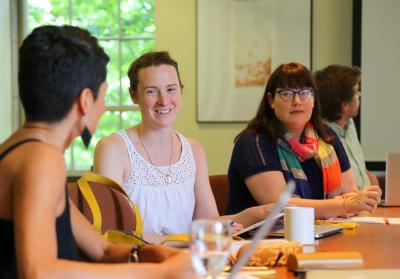
The Simpson Center offers annual summer fellowships for faculty and graduate students to pursue research projects that use digital technologies in innovative and intensive ways and/or explore the historical, social, aesthetic, and cross-cultural implications of digital cultures. The program has three primary goals:
- To animate knowledge—using rich media, dynamic databases, and visualization tools
- To circulate knowledge—among diverse publics
- To understand digital culture—historically, theoretically, aesthetically, and generatively
The Simpson Center gratefully acknowledges the support of a National Endowment for the Humanities Challenge Grant and the Andrew W. Mellon Foundation as well as many donors to the endowment which is underwriting these fellowships.
2026 - 2027 Digital Humanities Summer Fellows



2017 - 2018 Digital Humanities Summer Fellow
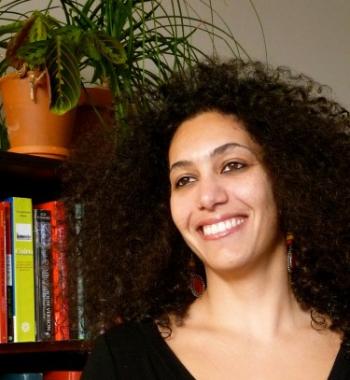
alma khasawnih (she/her/hers)
Digital Archival Map
The digital archival map is an online, bi-lingual (Arabic and English), open source, and searchable database and visual representation of the ephemeral palimpsest of visual culture production on the walls of Cairo since January 25, 2011 until today. The map is a relational representation of street visual cultural production, human affect, phenomenological experiences, and street happenings. The map challenges hegemonic geo-maps by creating subjective and changing visual narratives of the Egyptian revolution. It responds to processes of erasure and demolition of visual production by archiving and representing these images digitally.