Digital Humanities Summer Fellowships
The Simpson Center offers annual summer fellowships for faculty and graduate students to pursue research projects that use digital technologies in innovative and intensive ways and/or explore the historical, social, aesthetic, and cross-cultural implications of digital cultures. The program has three primary goals:
- To animate knowledge—using rich media, dynamic databases, and visualization tools
- To circulate knowledge—among diverse publics
- To understand digital culture—historically, theoretically, aesthetically, and generatively
The Simpson Center gratefully acknowledges the support of a National Endowment for the Humanities Challenge Grant and the Andrew W. Mellon Foundation as well as many donors to the endowment which is underwriting these fellowships.
2026 - 2027 Digital Humanities Summer Fellows



2015 - 2016 Digital Humanities Summer Fellow
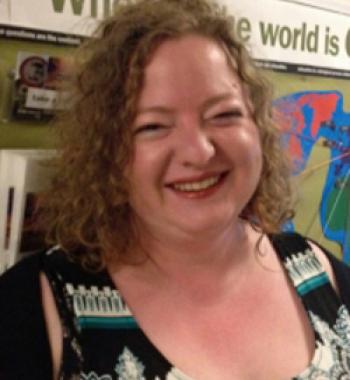
Sarah Kremen-Hicks (she/her/hers)
Digital Poiesis and the Problem of Genre
This project will investigate the underlying assumptions with regards to genre that inform the programming of digital text analysis tools. The goal of this project is not to offer concrete suggestions for improving text analysis tools to make them better-equipped to handle multiple genres, but to offer a critique of the assumptions of universal applicability and accessibility that are implicit in digital humanities as a field, and to do so by offering up a specific counterexample in the form of the inability of text analysis tools to properly handle poetry.