Digital Humanities Summer Fellowships
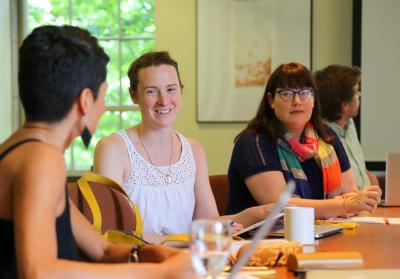
The Simpson Center offers annual summer fellowships for faculty and graduate students to pursue research projects that use digital technologies in innovative and intensive ways and/or explore the historical, social, aesthetic, and cross-cultural implications of digital cultures. The program has three primary goals:
- To animate knowledge—using rich media, dynamic databases, and visualization tools
- To circulate knowledge—among diverse publics
- To understand digital culture—historically, theoretically, aesthetically, and generatively
The Simpson Center gratefully acknowledges the support of a National Endowment for the Humanities Challenge Grant and the Andrew W. Mellon Foundation as well as many donors to the endowment which is underwriting these fellowships.
2026 - 2027 Digital Humanities Summer Fellows






2016 - 2017 Digital Humanities Summer Fellow

Matthew Bellinger (he/him/his)
The Visual Rhetoric of Bitcoin
This project uses digital tools to analyze and represent the visual rhetoric of Bitcoin, a digital currency. By analyzing and networking the ways in which Bitcoin is represented in a variety of visual media—from memes to book covers—this project highlights Bitcoin’s significance as a site of struggle over much broader concerns about the relationship between technology, economics, and politics.