Digital Humanities Summer Fellowships
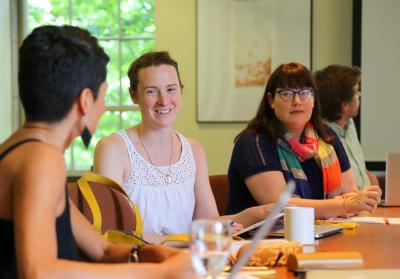
The Simpson Center offers annual summer fellowships for faculty and graduate students to pursue research projects that use digital technologies in innovative and intensive ways and/or explore the historical, social, aesthetic, and cross-cultural implications of digital cultures. The program has three primary goals:
- To animate knowledge—using rich media, dynamic databases, and visualization tools
- To circulate knowledge—among diverse publics
- To understand digital culture—historically, theoretically, aesthetically, and generatively
The Simpson Center gratefully acknowledges the support of a National Endowment for the Humanities Challenge Grant and the Andrew W. Mellon Foundation as well as many donors to the endowment which is underwriting these fellowships.
2026 - 2027 Digital Humanities Summer Fellows



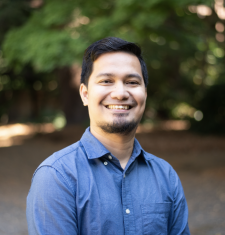


2016 - 2017 Digital Humanities Summer Fellow

Benjamin Gardner (he/him/his)
Selling the Serengeti: The Cultural Politics of Safari Tourism
Gardner completes an online companion for his book, Selling the Serengeti: The Cultural Politics of Safari Tourism (University of Georgia Press, 2016). He uses the free open-source publishing platform Scalar to produce an interactive site where different audiences can engage key questions and themes in the book by exploring a range of primary and secondary sources that inform the book and its core intellectual debates and arguments. The Scalar site will be useful for students and scholars interested in the discursive politics of conservation, the political economy, and cultural politics of safari tourism, and indigenous social movements.