Digital Humanities Summer Fellowships
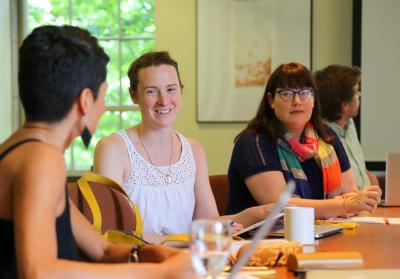
The Simpson Center offers annual summer fellowships for faculty and graduate students to pursue research projects that use digital technologies in innovative and intensive ways and/or explore the historical, social, aesthetic, and cross-cultural implications of digital cultures. The program has three primary goals:
- To animate knowledge—using rich media, dynamic databases, and visualization tools
- To circulate knowledge—among diverse publics
- To understand digital culture—historically, theoretically, aesthetically, and generatively
The Simpson Center gratefully acknowledges the support of a National Endowment for the Humanities Challenge Grant and the Andrew W. Mellon Foundation as well as many donors to the endowment which is underwriting these fellowships.
2026 - 2027 Digital Humanities Summer Fellows




2016 - 2017 Digital Humanities Summer Fellow
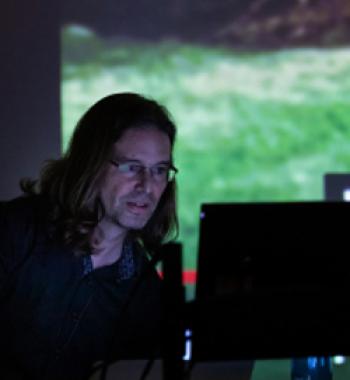
Stephen Groening (he/him/his)
The Seattle Television History Project
The Seattle Television History Project produces an open-ended, online, and publicly available research project aimed at recovering, archiving, and publicizing the local history of television in Seattle. A history of Seattle television necessarily comprises a range of types of materials: still and moving images, sound files of interviews, and the written history itself. An internet-based digital space for the gathering and analysis of these materials would both render them more publicly accessible and offer flexibility as more evidence and material is uncovered. While the project is largely an activity of digital curation, it will also be a launch platform for digital publication of research and scholarship.