Digital Humanities Summer Fellowships
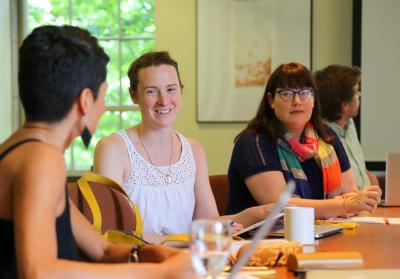
The Simpson Center offers annual summer fellowships for faculty and graduate students to pursue research projects that use digital technologies in innovative and intensive ways and/or explore the historical, social, aesthetic, and cross-cultural implications of digital cultures. The program has three primary goals:
- To animate knowledge—using rich media, dynamic databases, and visualization tools
- To circulate knowledge—among diverse publics
- To understand digital culture—historically, theoretically, aesthetically, and generatively
The Simpson Center gratefully acknowledges the support of a National Endowment for the Humanities Challenge Grant and the Andrew W. Mellon Foundation as well as many donors to the endowment which is underwriting these fellowships.
2026 - 2027 Digital Humanities Summer Fellows




2016 - 2017 Digital Humanities Summer Fellow

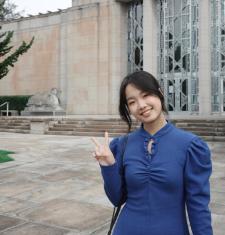
Jane Wong (she/her/hers)
Digital Interviews: The Poetics of Haunting in Asian American Poetry
This digital project, which includes interviews and related media, considers how social, historical, and political contexts “haunt” the work of contemporary Asian American poets in terms of content and form. The project will offer interviews with leading contemporary poets and feature text, video, and photography. These first-hand accounts, akin to an oral history archive, will offer a more direct, public, and nuanced understanding of “haunting” as a poetics.