Digital Humanities Summer Fellowships
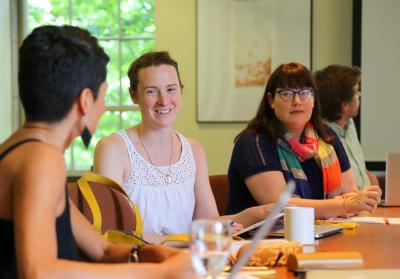
The Simpson Center offers annual summer fellowships for faculty and graduate students to pursue research projects that use digital technologies in innovative and intensive ways and/or explore the historical, social, aesthetic, and cross-cultural implications of digital cultures. The program has three primary goals:
- To animate knowledge—using rich media, dynamic databases, and visualization tools
- To circulate knowledge—among diverse publics
- To understand digital culture—historically, theoretically, aesthetically, and generatively
The Simpson Center gratefully acknowledges the support of a National Endowment for the Humanities Challenge Grant and the Andrew W. Mellon Foundation as well as many donors to the endowment which is underwriting these fellowships.
2026 - 2027 Digital Humanities Summer Fellows





2014 - 2015 Digital Humanities Summer Fellow

Annie Fee (she/her/hers)
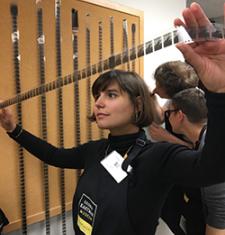
Cinephiles and Movie-Fans: A Counter-Cartography of Paris Film Culture, 1918-1928
This project aims to create a ‟deep” map of Parisian cinema culture following the Great War. Beyond creating the first visual representation of cinema locations in interwar Paris, the map will integrate autobiographical accounts of cinemagoers, news stories, and details of political meetings and protests held within the cinemas; thus each map point will be a gateway to the lived cinema experience of a specific historical community.